We’re Hiring! Apply To Join Our Team Today


Over 25 years of expert service
Why Is My AC Breaker Tripping in the Arizona Heat?
Your trusted partner for home comfort throughout Gila Valley and White Mountain.
When Arizona temperatures climb, your air conditioner may run for long stretches to keep your home comfortable. If the AC suddenly shuts down and you discover a tripped circuit breaker, you might assume the extreme heat is simply pushing the system too hard. While high temperatures can increase cooling demand, an AC breaker that repeatedly trips usually indicates an underlying problem that needs attention.
An AC breaker may trip when the air conditioning system draws more electrical current than the circuit can safely handle or when an electrical fault occurs. Possible causes include airflow restrictions, dirty condenser coils, failing motors or electrical components, compressor problems, damaged wiring, or even a faulty breaker.
Understanding why your AC breaker keeps tripping in Arizona can help you know when to stop resetting it and call an HVAC professional.
Is It Normal for an AC Breaker to Trip During Arizona Heat?
No. A properly operating and correctly installed air conditioning system should not repeatedly trip its circuit breaker simply because it is hot outside.
Arizona’s summer heat does increase the workload on an AC system. Longer operating cycles mean components may spend more time under load, potentially exposing weaknesses that were less noticeable during milder weather.
The circuit breaker is an important safety device. If it repeatedly trips, treat the problem as a warning rather than an inconvenience.
Here are seven common reasons an AC breaker may trip.
1. A Dirty or Clogged Air Filter
A heavily clogged HVAC filter restricts airflow through the system. Restricted airflow can interfere with normal cooling performance and place additional stress on certain system components.
Dirty filters can also contribute to other AC problems, including reduced cooling performance and evaporator coil icing.
However, a dirty filter should not automatically be blamed for a repeatedly tripping breaker. Breaker trips are electrical events, and several electrical or mechanical problems could be responsible.
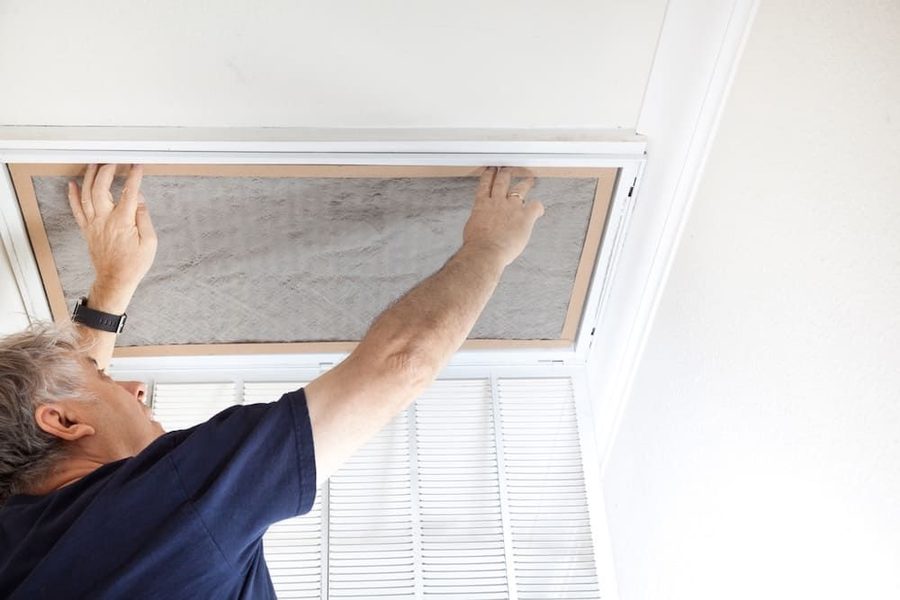
Homeowners can safely inspect their HVAC filter and replace it if needed according to the filter and equipment manufacturer’s recommendations. If the breaker continues to trip, professional diagnosis is necessary.
2. Dirty or Blocked Outdoor Condenser Coils
Your outdoor AC unit has an important job during the cooling process. It must release heat that has been removed from inside your home.
The condenser coil and fan help accomplish this. If dirt or debris interferes with airflow through the outdoor unit, the system may have more difficulty rejecting heat.
Arizona conditions can expose outdoor HVAC equipment to dust, dirt, leaves, and other debris. Keeping the area surrounding the condenser clear helps support normal airflow.
Homeowners can remove loose debris around the unit when it is safe to do so, but deeper coil cleaning and internal maintenance should be handled appropriately. If the AC breaker is already tripping, do not assume cleaning the outdoor unit will resolve the electrical problem.
3. A Condenser Fan Problem
The outdoor condenser fan moves air across the condenser coil. Problems with the fan can interfere with the system’s ability to release heat.
Potential condenser fan problems include:
-
Failing fan motor
-
Electrical connection problems
-
Failed or weakened components
-
Physical obstructions
-
Wiring issues
You might notice that the outdoor unit sounds different, the fan does not appear to operate normally, or the system stops cooling properly.
Do not reach into an outdoor unit or remove panels to investigate. HVAC equipment contains high-voltage electrical components, and some components can retain an electrical charge even after power is disconnected.
4. A Failing Capacitor or Electrical Component
Air conditioners depend on several electrical components to start, operate, and control motors and other equipment.
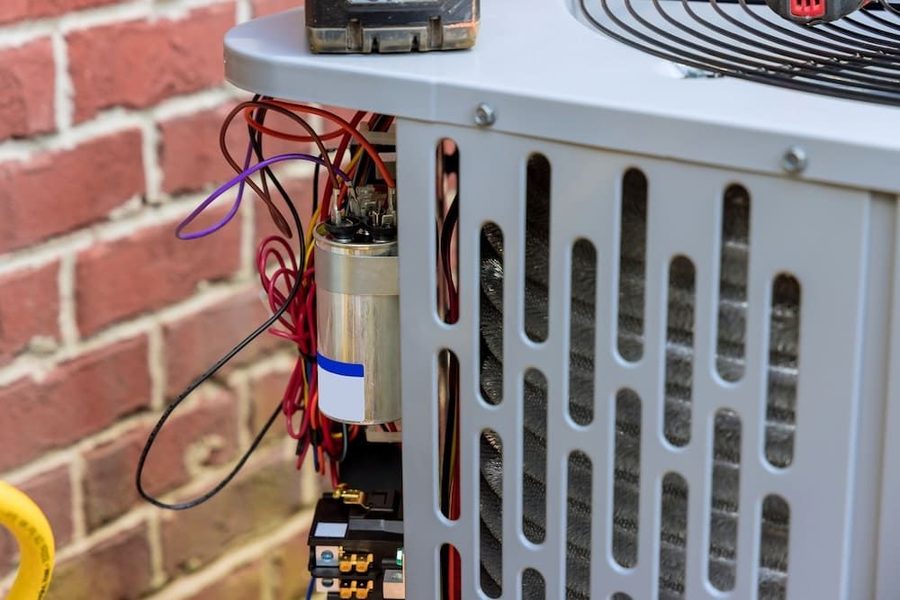
Capacitors, for example, are used with certain AC motors to help them start and/or operate properly. A failed capacitor can cause startup or operating problems. Contactors, relays, terminals, and other electrical components can also deteriorate or fail.
These problems require proper electrical testing to diagnose.
Capacitors are particularly unsuitable for DIY troubleshooting because they can retain an electrical charge. If you suspect an electrical problem inside your AC, leave the equipment closed and contact a qualified professional.
5. Compressor Problems
The compressor is one of the most important components of your air conditioning system and represents a significant electrical load.
Electrical faults within the compressor, mechanical problems, or difficulty starting can result in abnormal current draw. In some situations, this can cause the circuit breaker to trip.
A breaker that trips when the outdoor equipment or compressor attempts to start may provide a technician with a useful diagnostic clue. It does not, however, prove that the compressor has failed.
Compressor problems require professional testing. A compressor issue also does not automatically mean you need to replace the entire air conditioner. The system’s age, condition, repair history, and exact failure should all be considered before deciding between AC repair and replacement.
6. Damaged or Overheated Wiring
Air conditioning systems rely on numerous electrical connections, wires, terminals, and controls. Damage or deterioration anywhere in the circuit can create problems.
Possible issues include:
-
Loose electrical connections
-
Damaged wire insulation
-
Overheated terminals
-
Corrosion
-
Aging electrical components
-
Improper previous repairs
-
Short circuits or ground faults
Electrical problems may sometimes be accompanied by buzzing, burning odors, visible discoloration, or other unusual signs.
Do not remove HVAC or electrical panels to look for damaged wiring yourself. If you notice smoke, burning odors, sparking, or signs of overheating, leave the affected equipment off and seek professional assistance promptly.
7. A Problem With the Circuit Breaker
Sometimes the air conditioner is not the only possible source of the problem. Circuit breakers can also deteriorate or fail.
A qualified professional can determine whether the breaker is malfunctioning or correctly tripping because of a problem with the AC equipment or circuit.
Never solve a tripping problem by installing a higher-amperage breaker without determining why the existing breaker trips. The circuit protection must be properly matched to the wiring and equipment requirements. Increasing breaker capacity without the appropriate electrical design can create a serious safety hazard.
Can Extreme Arizona Heat Make an AC Breaker Trip?
Extreme Arizona heat can increase cooling demand and make an existing HVAC or electrical problem more noticeable, but high outdoor temperatures alone should not cause a properly functioning system to repeatedly trip its breaker.
During periods of intense heat, your AC may operate for longer periods. Outdoor equipment also has to reject heat while exposed to high ambient temperatures.
These conditions can expose problems involving aging components, restricted airflow, dirty coils, motors, compressors, or electrical connections.
That is why a breaker problem may first become noticeable during an Arizona heat wave even though the weather itself is not necessarily the underlying cause.
What Should You Do When Your AC Breaker Trips?
If your AC stops working and you discover a tripped breaker, focus on safety rather than repeatedly trying to restart the system.
You can:
-
Turn the cooling system off at the thermostat.
-
Check the HVAC filter for an obvious airflow restriction.
-
Look for obvious debris blocking airflow around the outdoor unit without opening the equipment.
-
Leave the system off if you notice burning odors, smoke, unusual electrical sounds, or signs of overheating.
-
Schedule professional AC service if the breaker trips repeatedly.
If a breaker immediately trips again, stop resetting it.
Why Shouldn’t You Keep Resetting a Tripping AC Breaker?
A circuit breaker is designed to interrupt power when it detects an electrical condition that exceeds its protective limits. Resetting the breaker does not correct whatever caused it to trip.
Repeated resets can continue exposing a malfunctioning system to power and may contribute to equipment damage or electrical hazards.
This is particularly important when the breaker trips immediately after being reset or as soon as the AC attempts to start.
Instead of treating the breaker as the problem, have a technician determine what is causing it to operate.
Why Does My AC Breaker Trip After Running for a While?
The timing of a breaker trip can provide useful diagnostic information.
If the breaker trips immediately, possible causes can include a short circuit, ground fault, wiring problem, compressor issue, or another significant electrical fault.
If the AC runs for a period before the breaker trips, a technician may investigate overheating components, motors, condenser airflow, compressor operation, and other conditions that can result in abnormal current draw.
Timing alone cannot identify the cause. Proper testing is still necessary.
Does a Tripping Breaker Mean I Need a New AC?
Not necessarily.
Some breaker-tripping problems involve components that can be repaired or replaced without replacing the entire air conditioning system. Other problems, especially major compressor or electrical failures in an aging AC, may make replacement worth considering.
Factors such as system age, equipment condition, previous repairs, efficiency, repair cost, and overall reliability should guide that decision.
A single symptom should not determine whether you replace your AC.
How Can Arizona Homeowners Prevent AC Electrical Problems?
Not every electrical failure can be prevented, but regular AC care can help identify certain problems before peak cooling season.
Homeowners can:
-
Schedule professional AC maintenance
-
Inspect and replace filters as needed
-
Keep outdoor equipment unobstructed
-
Address unusual noises or cooling problems
-
Avoid ignoring intermittent breaker trips
-
Have electrical problems professionally repaired
-
Avoid DIY modifications to HVAC wiring or breakers
Preventive maintenance cannot guarantee your AC will never break down, but it provides an opportunity to evaluate components before Arizona’s hottest weather places sustained demand on the system.
Schedule AC Repair With Advanced Air Systems
Arizona heat can make your air conditioner work hard, but a repeatedly tripping AC breaker is not something you should consider normal summer operation. Restricted airflow, condenser problems, failing electrical components, compressor trouble, damaged wiring, or a faulty breaker may all be responsible.
If your AC breaker keeps tripping, avoid repeatedly resetting it in an attempt to keep the system running. Professional troubleshooting can identify whether the problem is with the air conditioner, its electrical components, or the circuit supplying it.
Contact Advanced Air Systems to schedule professional AC repair and get to the source of a tripping AC breaker before the problem becomes more serious.

Leave Your Home Comfort To Us!
From routine maintenance to complete system replacements, Advanced Air Systems delivers reliable comfort solutions you can count on. Our experienced technicians focus on quality work, honest service, and keeping your home comfortable year-round.